AI · Nov 9, 2026
OpenAI’s Control Room puts a fail-closed kill switch inside the inference engineNvidia pitches its Vera CPU as the agent-era chip, citing partner gains from Perplexity, Daytona and DeepInfra
· Updated · Signal Desk newsroom
Analysis of reporting by NVIDIA Blog. How we work
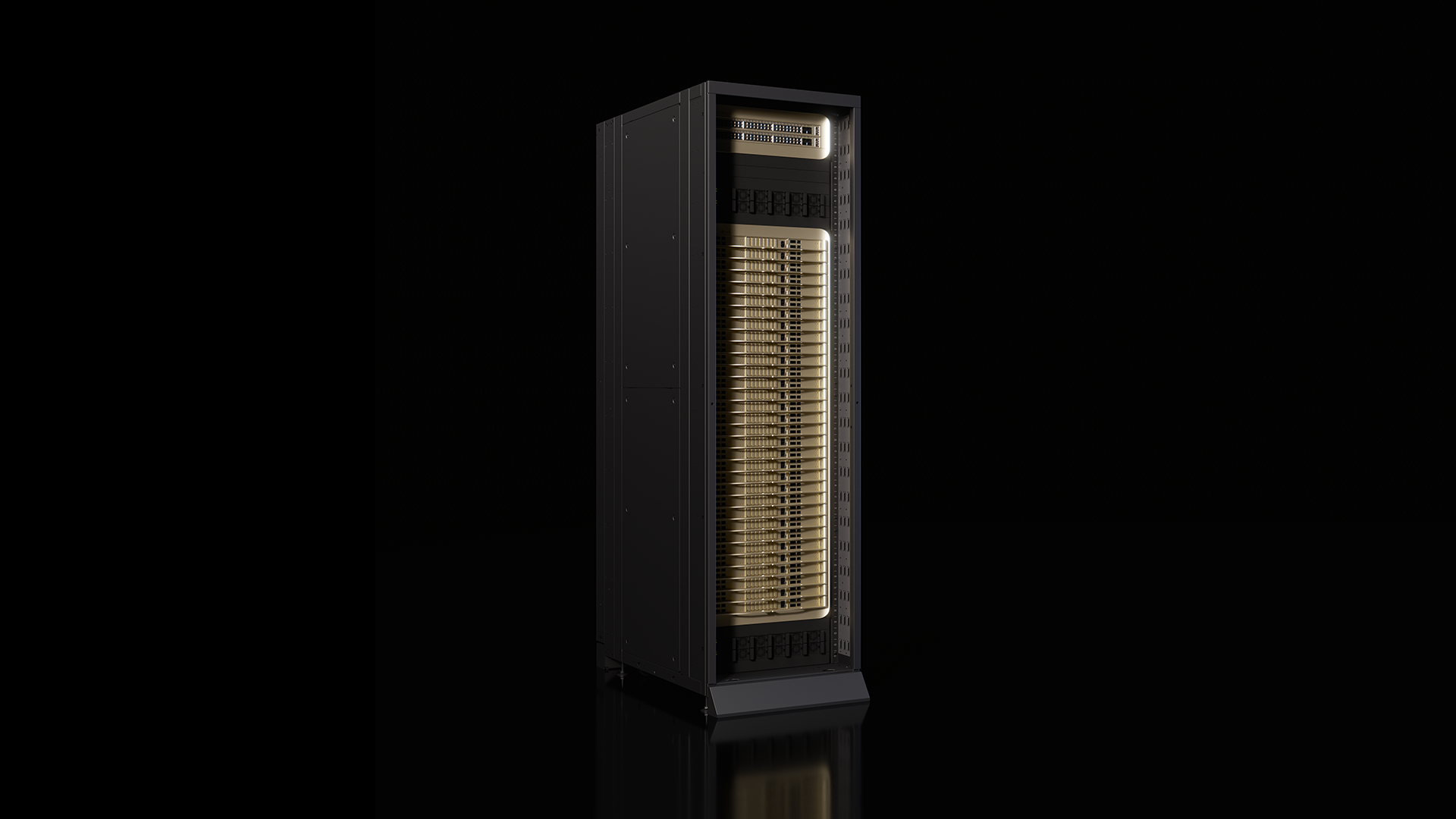
In a 100-megawatt comparison, Nvidia claims Vera delivers 1.6x more agents per watt than the fastest x86 part and 2x the agent speed of the most efficient. Partner numbers on sandboxes and orchestration are striking; independent benchmarks will decide if the CPU becomes a first-class AI factory choice.
Key takeaways
- Nvidia claims 1.6x more agents per watt than the fastest x86 part in a 100MW comparison.
- It claims 2x faster agent speed than the most efficient x86 part.
- Daytona brought 1,000 sandboxes online in 10.8 seconds on Vera versus 88.4 on x86.
- Perplexity reports agentic coding 1.5x faster and plans a production deploy.
- These are vendor and partner numbers; third-party replication is pending.
Why CPUs matter for agents
Agents don’t live on the GPU alone. They search, hit databases, write and test code, then return to model reasoning, and that bounce runs on CPUs inside power-capped AI factories. Nvidia’s earlier argument was that agent sessions are latency-bound chains with brief parallel bursts, not a race for core count (fleet challenges). Now it says Vera beats both the fastest and the most efficient x86 options in a 100-megawatt data center comparison: 1.6x more agents per watt than the fastest x86 part, and 2x faster agent speed than the most efficient x86 part at leading efficiency. The pitch is one part instead of mixing fast and dense x86 SKUs to balance latency and capacity. Vera also appears among Nvidia’s co-design levers for Vera Rubin (co-design).
Partner claims
- Perplexity
- Agentic coding 1.5x faster; a production deploy is planned.
- DeepInfra
- Up to 2.2x the best x86 on agentic orchestration.
- Daytona
- 1,000 agent sandboxes online in 10.8 seconds versus 88.4 on x86; 12.7 completed jobs per second at 2,000 concurrent sandboxes.
- Modal
- Up to 2x sandbox throughput per core.
- ClickHouse
- An untuned binary scaled across 176 cores to the top of ClickBench hardware.
- DuckLabs
- About 1.5x median TPC-H SF1000 versus an Intel Xeon 6 baseline.
Reading vendor numbers
Vendor benchmarks deserve a raised eyebrow, but the direction is right. Agent fleets fail on orchestration latency and sandbox churn as often as on token throughput, and a CPU that shrinks that wait under a power cap is useful infrastructure. Nvidia’s earlier efficiency claims also leaned on internal results (30x per watt), so independent replication matters more than launch-week quotes.
If the comparisons are cherry-picked, buyers may standardize on an Nvidia-shaped rack that is hard to exit, and x86 vendors will answer with agent-tuned SKUs that muddy the one-CPU pitch. Either way, agent economics are rewriting the bill of materials as Nvidia extends beyond GPUs into networking, software and CPUs. More in our Nvidia coverage and agents coverage.
Who feels it
- Cloud and AI factory operators
- A way to simplify CPU fleets under megawatt caps.
- Agent platform builders
- Possible sandbox and orchestration speedups.
- x86 vendors
- Pressure to publish agent-specific, power-normalized results.
- Enterprises
- Reason to ask which CPUs their agent runtimes use.
What to watch
- Third-party benchmarks reproducing the 100MW assumptions.
- Perplexity’s production Vera deployment.
- Vera pricing and availability in major clouds.
- Intel and AMD counter-benchmarks on sandbox density.
FAQ
What is Nvidia Vera?
Nvidia’s data center CPU, pitched for agent workloads that bounce between tools, code and model reasoning.
Is Vera faster than x86 for AI agents?
Nvidia claims 1.6x more agents per watt than the fastest x86 part and 2x the speed of the most efficient, but these are vendor numbers.
Who is using Vera?
Partners including Perplexity, DeepInfra, Daytona, Modal, ClickHouse and DuckLabs reported early results.
More on AI
AI · Oct 21, 2026
OpenAI on Google Cloud lets companies spend Google commitments on GPT-6, and that changes procurementAI · Oct 19, 2026
Microsoft ships Guardian Agents, saying frontier models ‘can’t be trusted’AI · Nov 11, 2026
OpenAI’s $2 million for children’s AI safety research matters for one promise: publishing bad newsAI · Oct 28, 2026
RTX Spark laptops get open speech models and a dial for background agents