AI · Oct 28, 2026
RTX Spark laptops get open speech models and a dial for background agentsNvidia’s Dynamo recipes speed four Korean open models to production, tuned for B200s
· Updated · Signal Desk newsroom
Analysis of reporting by NVIDIA Blog. How we work
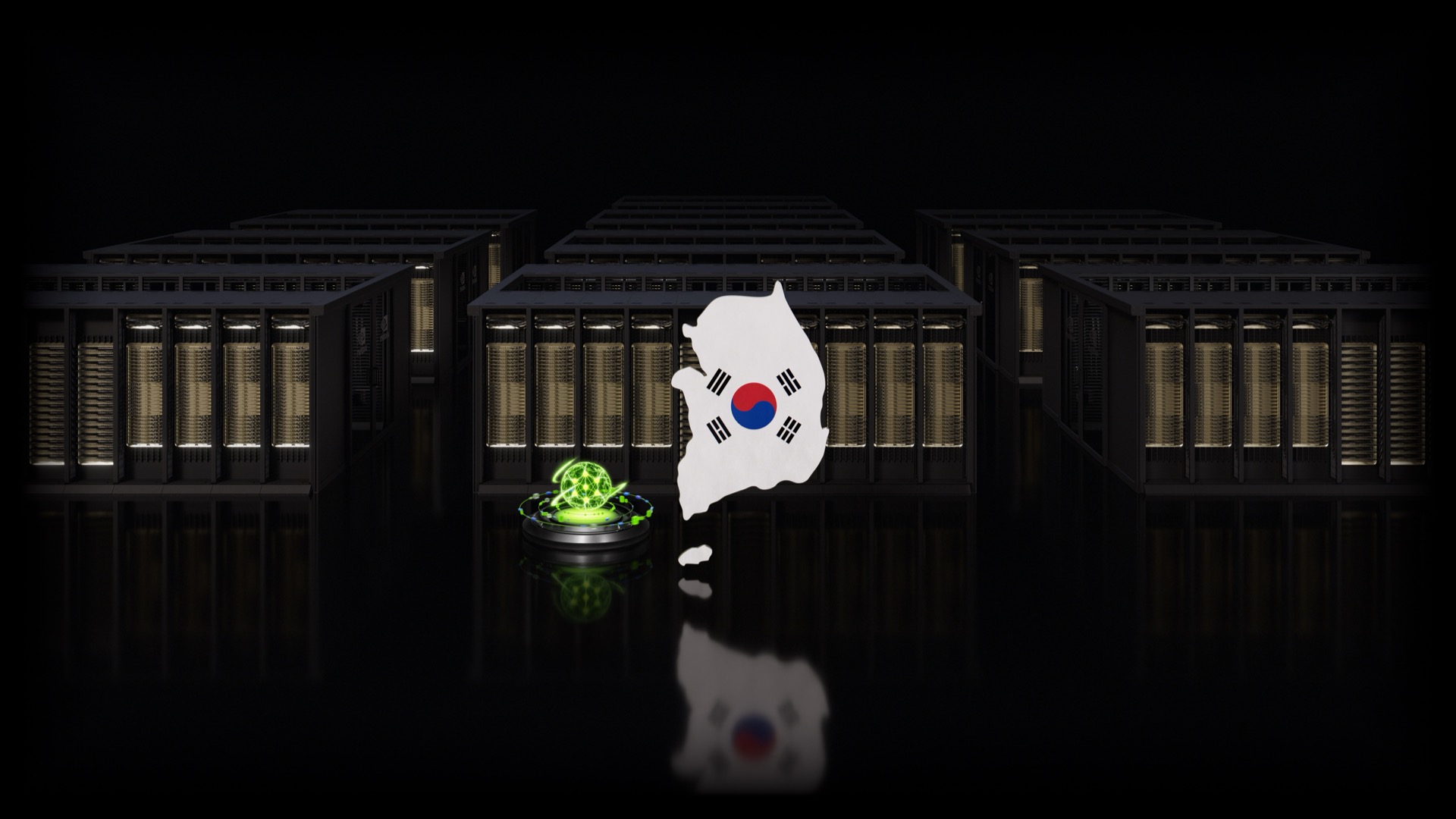
Ready-made serving recipes for SK Telecom’s A.X K2, LG’s K-EXAONE 2.0, Upstage’s Solar Open 2 and Motif-3 cut multi-GPU trial and error. The up-to-2x claim lacks a baseline, and the know-how concentrates on Nvidia’s newest hardware.
Key takeaways
- Recipes cover SK Telecom’s A.X K2, LG AI Research’s K-EXAONE 2.0, Upstage’s Solar Open 2 and Motif Technologies’ Motif-3.
- Dynamo is Nvidia’s open-source framework for serving large models across many GPUs and nodes.
- Nvidia claims up to 2x performance out of the box on B200 GPUs but doesn’t state the baseline.
- The models span a telecom, a conglomerate lab and two independent labs.
- Open weights stay open, but operational know-how concentrates on one hardware platform.
What shipped
Nvidia is publishing Dynamo deployment recipes for four Korean open models: SK Telecom’s A.X K2, LG AI Research’s K-EXAONE 2.0, Upstage’s Solar Open 2 and Motif Technologies’ Motif-3. Dynamo is Nvidia’s open-source framework for serving large models across many GPUs and nodes. Splitting a big model across GPUs means coordinating routing and communication, and getting it wrong wastes expensive hardware; Nvidia says the B200-tuned recipes deliver up to 2x performance out of the box. It sits within Nvidia’s broader collaboration with Korea’s AI for All initiative (sovereign AI), and the mix of a telecom, a conglomerate research arm and two independent labs gives the recipes a broad test.
Closing the checkpoint-to-service gap
Open models matter only if people can run them well, and the gap between a published checkpoint and a fast, reliable service is where many teams lose months. Pre-tuned recipes close that gap and make Korean-language models more practical for local businesses and public services. Motif and Upstage are also among Nvidia’s Korean investment targets (startups), and LG’s newer K-EXAONE-2.5 just opened via API (secure agents).
Treat “up to 2x” as a vendor ceiling, not a guarantee. The post doesn’t name the baseline, and real workloads vary; independent operator reports will show what holds. Earlier Dynamo-Triton work showed similar speed-for-silicon trade-offs (multi-GPU serving).
A subtler dependence
The recipes are optimized for B200s. That is sensible engineering, and it means the easiest production path for Korea’s flagship open models runs through Nvidia’s latest, priciest hardware. Dynamo being open source softens that, but the tuning work lives where Nvidia put it. If the pattern scales, open weights stay open while the operational know-how concentrates around one platform, the same dynamic as Nvidia owning the Hub where open models live (Hugging Face deal). Helpful release, worth naming the trade. More in our Nvidia coverage and tools coverage.
Who feels it
- Developers
- A tested starting point instead of tuning multi-GPU serving from scratch.
- Korean model labs
- An easier production path that could widen adoption.
- Cloud and hosting providers
- B200 operators move faster; others benefit less.
What to watch
- Independent benchmarks versus self-tuned deployments.
- Recipes for other GPU generations or non-Nvidia hardware.
- Korean production services adopting them.
- Recipes for more Korean open models.
FAQ
What is Nvidia Dynamo?
Nvidia’s open-source framework for serving large models across many GPUs and nodes.
Which Korean models got Dynamo recipes?
SK Telecom’s A.X K2, LG AI Research’s K-EXAONE 2.0, Upstage’s Solar Open 2 and Motif Technologies’ Motif-3.
How much faster are the Dynamo recipes?
Nvidia claims up to 2x out of the box on B200 GPUs, without stating the baseline.
Companies: NVIDIA
More on NVIDIA
AI · Nov 5, 2026
NVIDIA’s four open Cosmos 3 Nano models let robot and driving teams simulate worlds that reactAI · Nov 9, 2026
Nvidia’s Korean startup bets span interconnect, open models, robot hands and document AIAI · Nov 5, 2026
Nvidia profiles Chris Alexiuk, the YouTube teacher making the case that open AI means weights, data and recipesAI · Oct 21, 2026
Europe’s banks are training their own AI on open weights, with Nvidia underneath