AI · Sep 30, 2026
The four rules in the White House AI commitment, and the missing fifth: penaltiesMeta replaces ad IDs with a semantic token vocabulary to sharpen recommendations
· Updated · Signal Desk newsroom
Analysis of reporting by Meta Engineering. How we work
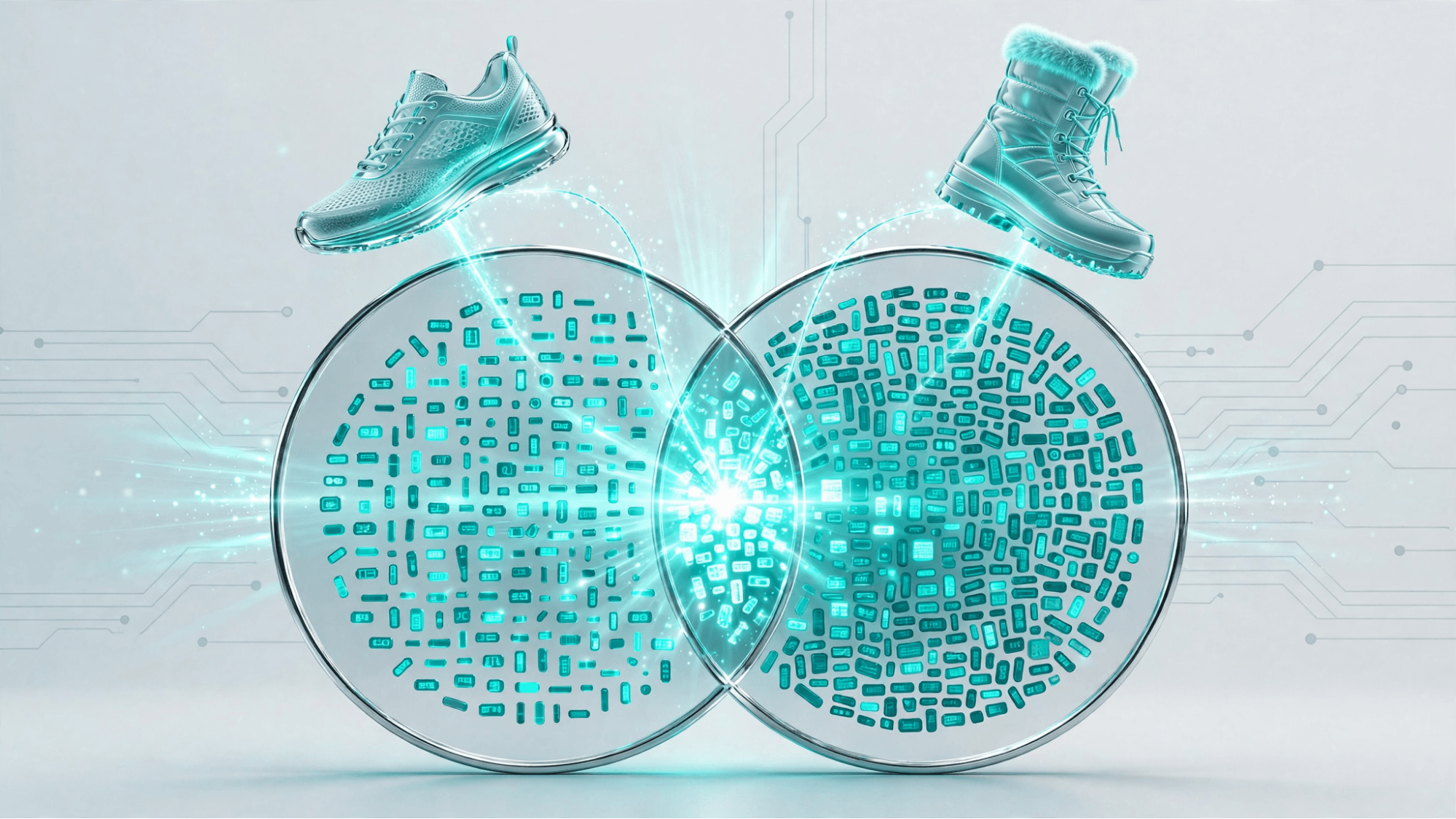
Meta’s GenRecs Tokenization describes ads, products and pages as short token sequences from a stable semantic vocabulary, so new items inherit what the model knows about similar ones. Paired with Meta’s GEM and Adaptive Ranking models, it delivered a 0.35% conversion lift, per internal February 2026 data.
Key takeaways
- GenRecs Tokenization replaces per-item IDs with short sequences of tokens from a shared semantic vocabulary.
- Similar items share tokens, easing the cold-start problem for new or low-traffic ads.
- With the Generative Ads Model and Adaptive Ranking Model, Meta reports a 0.35% conversion lift across surfaces.
- Across eight tokenizer versions, intrinsic metrics like cluster purity tracked downstream click-prediction accuracy.
- Meta plans a single token space spanning text, images, audio and video.
What Meta built
Meta’s engineering team detailed GenRecs Tokenization, the data layer behind what it calls Generative Recommenders. Instead of giving every ad, product, page or pixel its own dedicated ID, the system describes each item with a short sequence of tokens drawn from a stable semantic vocabulary. Similar items share tokens, so a new ad can inherit what the model already knows about related items. The tokenizer works in three stages: encode an item into a semantic embedding using pretrained multimodal models that read its text and images blended with engagement signals, decompose it into independent subspaces, then map each subspace to a codebook entry.
Paired with Meta’s Generative Ads Model (GEM) (GEM) and its Adaptive Ranking Model, Meta says the approach delivered a 0.35% lift in conversions across surfaces, based on internal data measured in February 2026. That sounds modest, but at Meta’s scale a fraction of a percent in conversions represents a large amount of advertiser spend working harder.
Fixing cold start
Item IDs are brittle: a new product starts with nothing, and a niche ad with little traffic never gathers enough signal to be ranked well. With semantic tokens, a new trail shoe looks like last season’s trail shoe from the first impression, a real fix for cold start that most benefits smaller advertisers with thin data. Meta also reports that across eight tokenizer versions, intrinsic measures such as cluster purity, balanced distribution and codebook use tracked downstream ad-click prediction accuracy, letting the team improve the tokenizer without waiting for full model training cycles.
The shift reflects a broader move in recommendation systems from scoring candidates on click history toward language-model architectures that reason about what an item is and what a person wants. Meta says it is building LLM-native retrieval on the same vocabulary and reasoning-aware ranking on top, combining compact verbalized tokens with semantic IDs to keep latency acceptable.
Concentration and profiling
This is a system for understanding people better in order to sell to them. Meta describes a feedback loop where better predictions on long-tail ads improve training data, improving predictions for every ad; such flywheels are efficient and concentrate advantage, making it harder for others to compete for ad dollars. Meta’s roadmap of a single token space across text, images, audio and video would let models reason about a person’s interests and an advertiser’s offer in one representation, a deeper preference profile than click histories, and the post says nothing about how users can see or shape it. Meta’s ad systems have also faced scrutiny over harmful ads that slipped through review (San Francisco order). More in our Meta coverage, marketing coverage and research coverage.
Who feels it
- Advertisers
- New and low-traffic ads should find audiences faster.
- Small businesses
- Niche products gain most from cold-start fixes.
- Users
- More relevant ads built on a richer, less inspectable interest profile.
- Recommendation engineers
- A playbook for semantic IDs and tokenizer metrics.
What to watch
- Updated conversion figures as token coverage expands.
- Progress toward a cross-modal token space.
- Rival ad platforms adopting semantic IDs.
- Privacy scrutiny of LLM-based ad targeting.
FAQ
What is GenRecs Tokenization?
Meta’s system for describing ad items with tokens from a stable semantic vocabulary instead of unique IDs.
What results did Meta report?
A 0.35% conversion lift across surfaces, based on internal February 2026 data.
Why does it help new ads?
Similar items share tokens, so new ads inherit knowledge about related items.
What comes next?
A shared token space across text, images, audio and video, plus LLM-native retrieval.
Companies: Meta
More on Meta
AI · Sep 29, 2026
Each Dot gets its own cloud computer and browser, with approval gates for sensitive actionsAI · Oct 14, 2026
Hugging Face’s guide to running Muse Spark Open: 816B parameters, 42B active, from vLLM to llama.cppAI · Oct 28, 2026
Inside Meta’s new Andromeda: a billion ads scored per secondAI · Oct 13, 2026
Meta’s GEM ads model moves to one central foundation model, claiming an 18.9% conversion lift