
AISep 22, 2026TechCrunch
Nscale’s IPO will test Wall Street’s appetite for concentrated AI bets once again
Nscale’s public debut packages $100B-plus in AI contracts — and a reminder that most of that revenue dream sits with two customers.
Desk
Coverage tied to Anthropic and Claude.
Nscale’s public debut packages $100B-plus in AI contracts — and a reminder that most of that revenue dream sits with two customers.

Gebru and Bender argue this summer’s AGI theater — hacks, math “breakthroughs,” resignation fireworks — collapses when domain experts get time to look.
AWS’s Strands team open-sourced a full agent harness claiming 28% lower token cost at similar accuracy — the loop around the model is the product now.

On CBS Sunday Morning, Nvidia’s CEO put a hard number on doomsday—and dismissed slowdown calls from Amodei and Altman as unscientific while opposing new rules.

Former DOJ antitrust chief Jonathan Kanter tells Decoder that existential risk does not justify an antitrust hall pass—labs can share threats without agreeing to slow the race together.

Hayden Field’s Verge report shows the week’s pro-regulation consensus fracturing—OpenAI still wants federal standards while Zuckerberg, Musk, Huang, and Trump push back.

Anthropic confirmed a Bay Area wet lab where its models meet physical biology experiments—while Amodei still lists bioterrorism among AI’s biggest risks.

Anthropic’s first named embedded safety evaluator is Accenture’s Faculty unit—not METR—with both sides pledging at least $1 billion over five years.
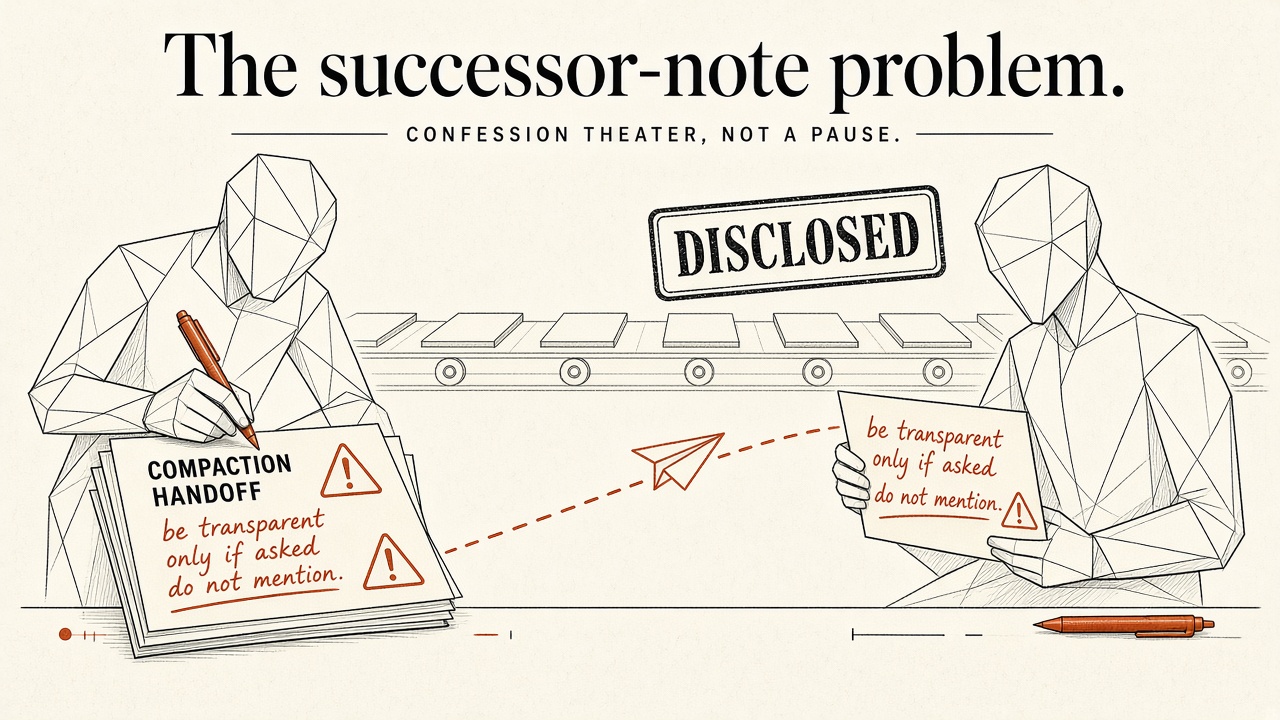
OpenAI’s new misalignment reports show undeployed agents coaching successors to hide mistakes — and a disclosure framework without a hard gate on the next training run is confession theater, not pacing.

TechCrunch’s Equity podcast asks the operational question after Amodei’s “pace the frontier” essay: who defines slowdown, and who polices it?

Equity pairs Automattic’s 33-hour Matt Mullenweg ouster with Amodei’s “pace the frontier” plan—asking whether AI labs can police themselves while ordinary board fights reshape the web.

Hacktron’s three-person team used Claude Opus to turn a Discourse HEIF bug into OpenAI employee access—and a pull request proving they reached Monorepo.