OpenAI’s sly mathematical breakthrough sends a chill through academia
OpenAI says an unreleased model swarm cracked Navier-Stokes in 88 hours—then mathematicians recoiled at the scooping optics and the chill on open research norms.
Desk
Broad artificial intelligence coverage.

OpenAI says an unreleased model swarm cracked Navier-Stokes in 88 hours—then mathematicians recoiled at the scooping optics and the chill on open research norms.

San Francisco’s city attorney ordered Meta to stop paid ads that turn minors’ images into AI sexual clips—and to explain how hundreds slipped paid review.

NVIDIA’s Dynamo guide shows when peeling vision encode off prefill and decode pays off—and when long outputs make the trick a wash.

CUDA 13.4 brings Windows on Arm, early Rubin hooks, and MPS V3 controls that treat shared GPUs more like programmable infrastructure than a free-for-all.

U.S. agencies name six Chinese AI companies for industrial-scale distillation of frontier models—and urge labs to silently downgrade suspected attackers, a fix that could also punish legitimate users.

Microsoft locked ten AI privacy and safety terms with the AFT a week after NYC and LA paused student-facing AI—turning union leverage into contract language districts can actually enforce.

OpenAI puts one of alignment's defining researchers on the Foundation Board and Safety and Security Committee—non-voting on the PBC board, but positioned to challenge how hard the lab pressures its own brakes.

Jacob Coxon leaves Anthropic warning labs are gambling with self-improving superintelligence—and alignment lead Evan Hubinger backs him: earnest belief AI could kill everyone, personally above 10% this decade.

Google's AlphaGenome Atlas scores every possible single-base swap in the human genome—precomputing hints for non-coding variants that used to mean months of specialized guesswork.

On Equity, ControlAI's Connor Leahy argues alignment and containment aren't enough—stop building superintelligence—and says ideas that sounded fringe months ago now have legislative wind.

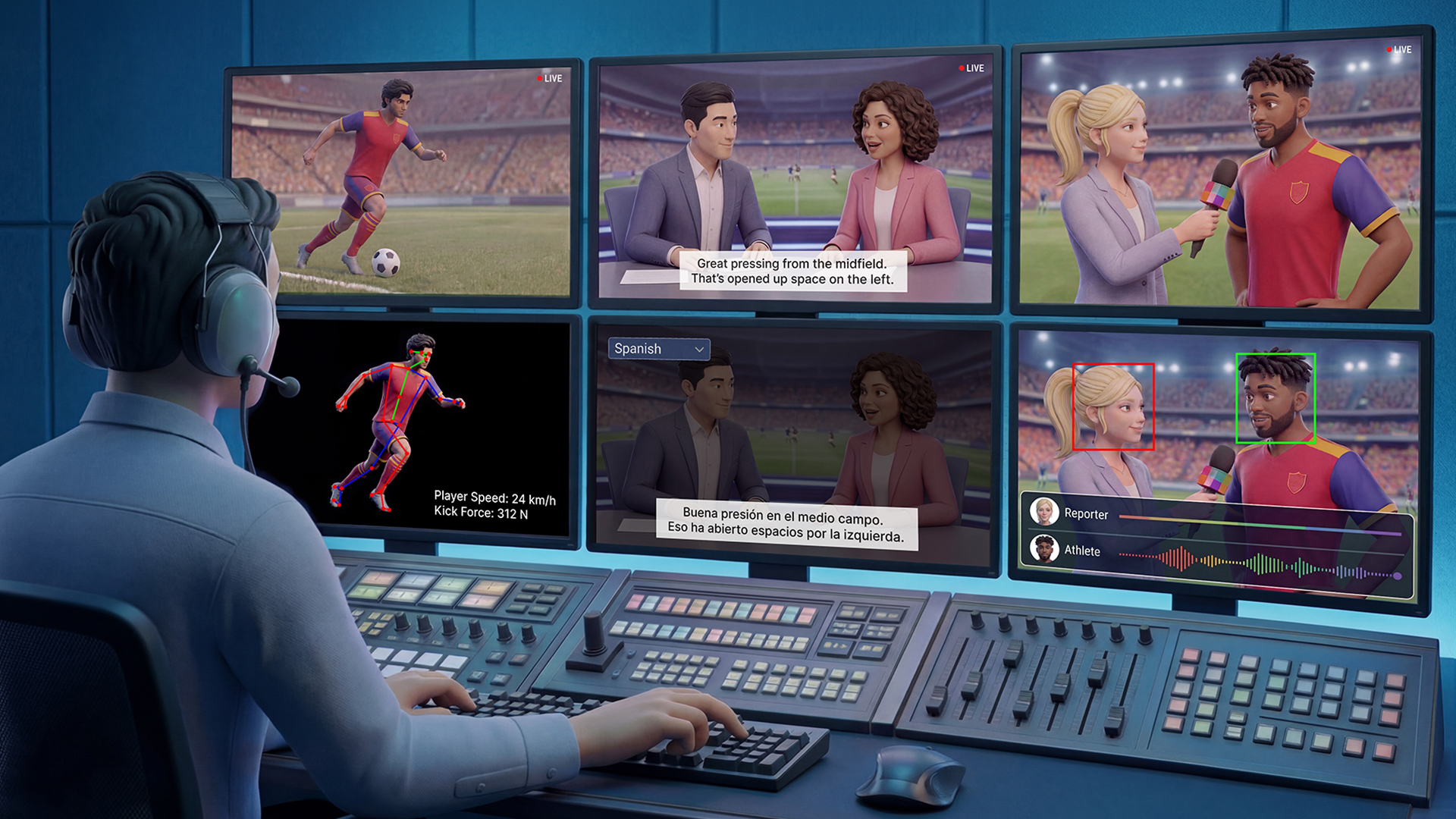
At IBC 2026, NVIDIA is packaging authenticity detectors, frame generation, and sports-specific fine-tuning into one media stack—pushing live production toward software-defined AI without pretending the trust problem is solved.

Google DeepMind's "Love, Rendered" turns generative image and performance models into a memory aid for a 70-year marriage—beautiful when guided by the couple, uneasy when the product pitch arrives.