OpenAI launches visual ads that appear alongside image generation results
ChatGPT's ads are moving from text into pictures, placed next to the images people ask it to make. The business logic is clear. The trust test is just starting.
Desk
Broad artificial intelligence coverage.

ChatGPT's ads are moving from text into pictures, placed next to the images people ask it to make. The business logic is clear. The trust test is just starting.

OpenAI's own numbers show how fragile text watermarks are: swap a quarter of the words and detection collapses. That candor is the most useful part of its EU plan.

A crowd of parallel agents, apparently on Tencent infrastructure, is quietly pulling Amap directions through a URL scanner — harmless so far, but it shows how loud and ordinary agent traffic has become.

Adam Schiff calls the White House AI safety pledge meaningless and wants a real regulator with teeth — but after Loper Bright, any new AI agency walks straight into a courtroom.

A sponsored MIT Technology Review piece says enterprise AI has moved from forecasting to acting on its own forecasts — the claim is plausible, but the hard part is the drift it barely names.

ChatGPT’s ads are graduating from a logo and a link to sponsored images beside your generated pictures — a modest test that tells us where free AI is headed.

NVIDIA is showcasing startups using AI at every step of breast cancer care, from two-minute wearable ultrasound to pathology-based treatment predictions — promising, but it’s a vendor’s highlight reel, not a trial readout.

OpenAI is putting visual ads next to ChatGPT’s image generator and wiring in the ad industry’s measurement stack — the moment the assistant officially becomes a storefront, and trust becomes the product.

A sharp essay calls AI a “cognitive hot dog” — and while we think it undersells real uses, its warning about schools outsourcing effortful thinking is one the industry should stop waving away.

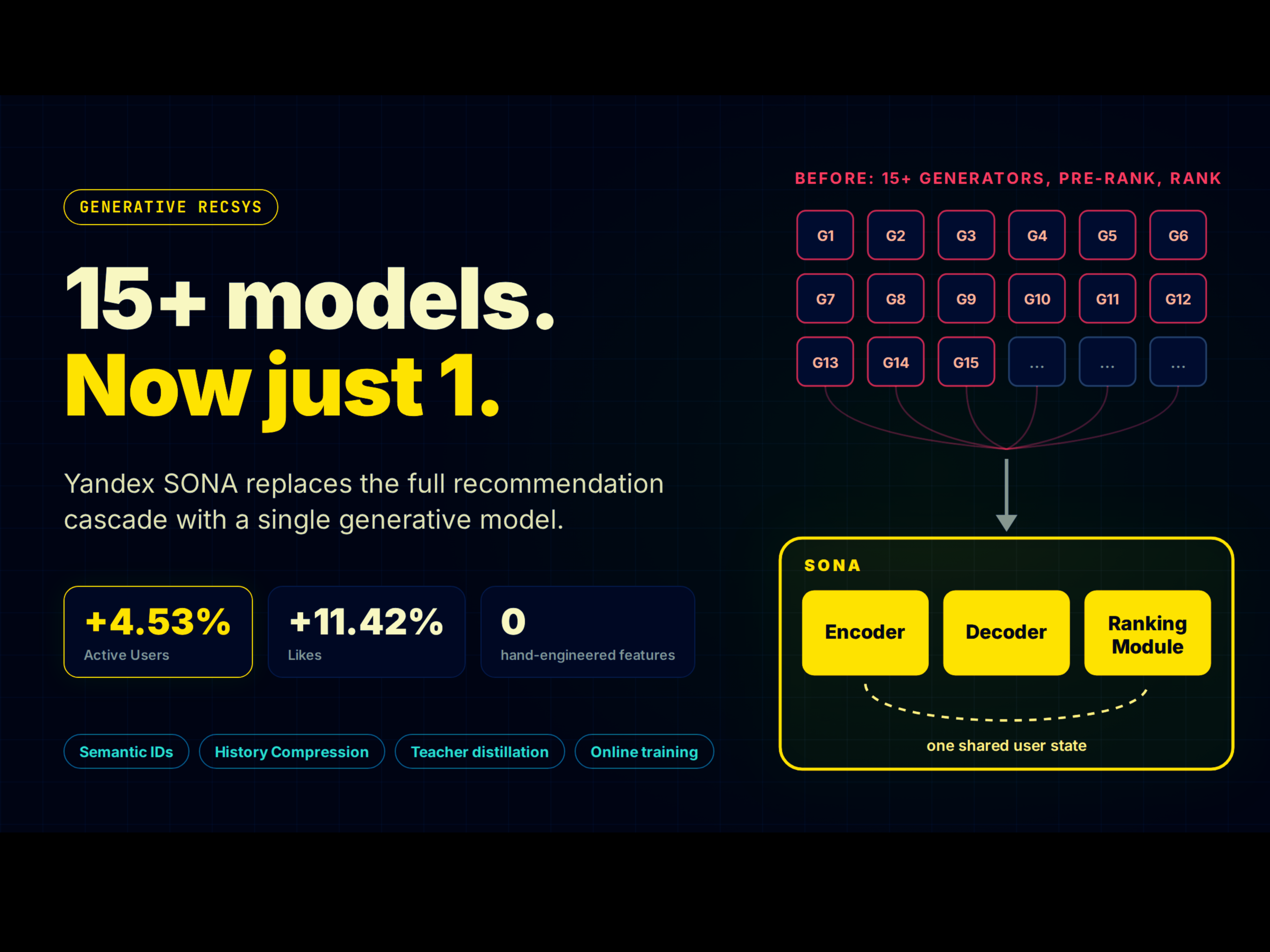
Yandex collapsed a music recommender’s whole cascade — 15-plus generators, a pre-ranker and a ranker — into one transformer, and live users listened more. The engineering is impressive; the engagement lever is the story.

The polls say people dislike AI while usage keeps exploding. We think the backlash isn’t aimed at the tools so much as the companies insisting they’ll remake everyone’s life — and that’s fixable.

Qwen’s three-year climb from a 7B release to 2.4 trillion open parameters shows how Alibaba won developers with permissive weights — and how quietly it’s now fencing off the frontier.